

Risk Rundown:
Ticketing
Current fraud landscape
The event tickets market has rebounded remarkably well since the pandemic. In fact, demand for live events surpassed pre-pandemic levels in 2022, and sales are expected to reach $94B globally by 2028.
Unfortunately, ticketing fraud is also thriving. Riskified’s research team identified a 22% YoY increase in risk as of mid-2024, fueled by some unique vulnerabilities that go beyond the typical CNP threats that exist across ecommerce. Criminals like to target event tickets, given that:
They can be purchased instantaneously and virtually anonymously, with minimal identity data (no need for a shipping address) and often with little time for a thorough payment review by the merchant.
They are easy to monetize, especially for popular, high-demand events, and there are plenty of secondary platforms available for reselling tickets.
Their limited supply naturally drives demand and commands premium pricing.
TICKETS RISKINESS OVERTIME
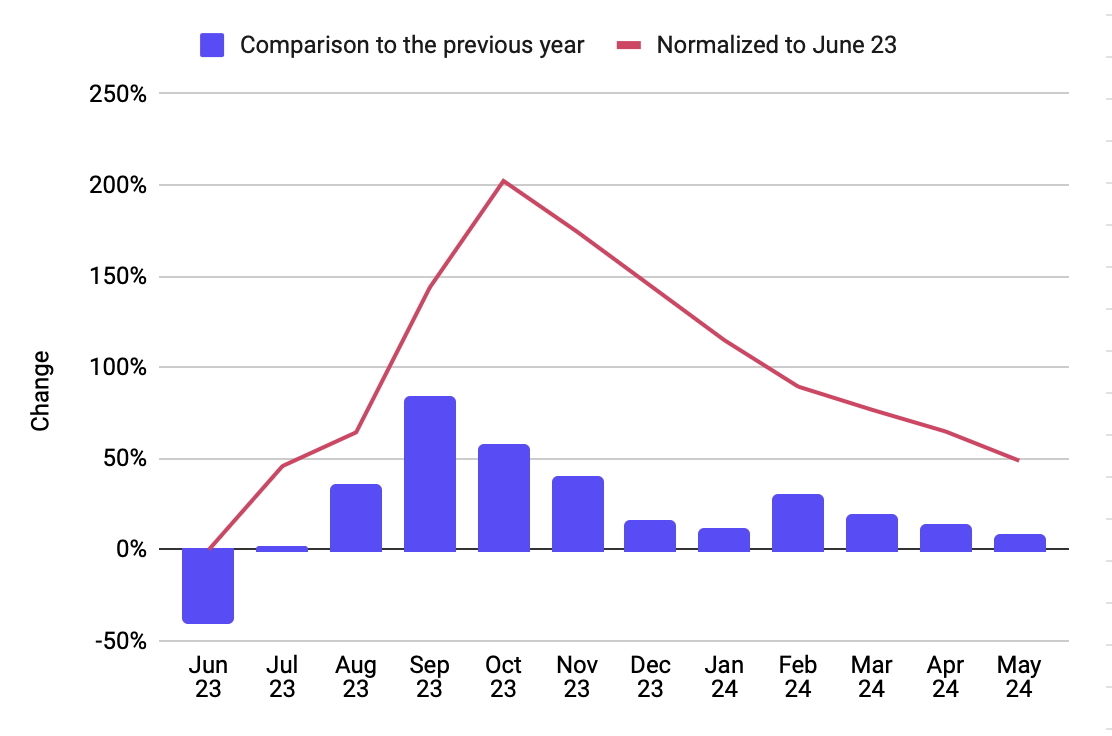
Source: Riskified
Key challenges:
- “Everything is possible with social engineering,” reads the dark web advice uncovered by Riskified researchers. Fraudsters use social engineering to claim chargebacks (“I had to leave early”… “I didn’t get the email”…), and customer service teams are forced to make tough calls
- High-velocity transactions and high-demand events invite exploitation and fraud attacks
- A flourishing aftermarket makes it tricky for fans to differentiate between legitimate and fraudulent resellers and for merchants to discern last-minute sales from last-minute fraud
- Ticket prices and demand are seasonal, volatile, and often unpredictable. Event types, genres, and even venues have highly variable risk profiles, so ticket merchants must continually recalibrate and fine-tune their fraud strategies
For this industry analysis, Riskified’s research team looked at a year’s worth of concert, sports, and theater ticket sales to identify emerging fraud trends.
Risk trends
Ticketing fraud is nothing if not egalitarian. It is perpetrated against consumers, merchants, and events alike, and successful fraudsters are a diverse crowd. They range from rank amateurs testing out social engineering (e.g., pretending to be someone else) to professionals using bots for bulk purchases.
Fraud tactics in the ticketing industry are evolving at a rapid pace, with fraud rings increasingly targeting entire sectors rather than isolated businesses. This shift underscores a more coordinated and systemic approach by fraudsters to exploit the fast-moving ticket market. Riskified has closely monitored these developments, uncovering shared patterns and strategies that often migrate between ticketing merchants. Below, we examine these tactics.
Risk by ticket price
While transactions with the highest-priced tickets are generally the riskiest to a business, they represent only a small share of orders. More problematic for merchants is the $201 to $500 bucket, which has the highest share of fraud and is a more common order. This price range creates a heavier operational workload and increases the risk of false declines.
TICKET PRICE CATEGORIES BY RISK LEVELS
Risk by ticket volume
Orders containing 11-50 tickets are most likely to be fraudulent. However, purchases of 2-5 tickets, which make up the majority of orders, are more challenging for merchants.
Fraudsters target this category to mimic good customer behavior, blending in to avoid detection. Merchants must tread carefully to block fraud without falsely declining legitimate payments.
NUMBER OF TICKETS – RISK COMPARISON
Risk by event type
Many variables inform the riskiness of a particular event. Sports, concerts, and theater events, for example, have very different risk profiles. Seasonal factors, genres within event types, and event location all significantly impact risk. Merchants must maintain agile strategies and continually recalibrate their fraud prevention efforts throughout the year and across their ticket portfolio.
EVENT CATEGORY – RISK LEVELS
Risk by lead time
Risk variables related to purchase lead time create additional complexity for merchants.
Advance purchases are popular and perceived as low-risk, but they can also generate high fraud costs because fraudsters can take advantage of a longer resale window.
Same-day purchases are prone to higher prices and susceptible to fraud, but that risk varies by event type. Same-day concert ticket orders carry almost double the risk of same-day sports tickets, so merchants can’t apply one-size-fits-all rules.
PURCHASE TIME – RISK LEVELS
Risk by day and time (it’s fraud o’clock somewhere)
While most ticket orders are placed between 10 am and 8 pm (in the buyer’s time zone), fraudsters don’t keep such regular hours. The busiest hours for fraud are around 3-5 pm and 11 pm (buyer’s time zone). So if you sell tickets internationally, you’ll see fraud around the clock.
In addition, more than 50% of fraudulent activity takes place on Friday, Saturday, and Sunday. This is likely because fraudsters want to avoid detection by targeting hours with less staff coverage.
Risk through device takeover fraud (DTO)
Recent fraud ring attacks reveal a clear pattern of off-hours orders — primarily during the middle of the night or early morning — using downgraded, less secure Linux/Android device operating systems and non-traditional payment methods, like credit cards issued in East Asian countries or payments via PayPal, Google Pay, and Amazon Pay. It seems that these device takeovers often begin with a phishing link sent to an elderly customer. Fraudsters then act on the victim’s devices during hours when the real customer is likely sleeping, easily passing SMS verification to purchase high-value tickets . So far in 2025, 60% of DTO attacks uncovered by Riskified have targeted the ticketing sector and some ticket merchants have experienced notable financial losses over short periods as a result of these attacks, highlighting the urgent need for robust fraud prevention strategies to safeguard this vulnerable industry segment.
Proven strategies
With so much volatility, velocity, and variability (the 3 Vs) at play, the ticketing fraud landscape is as complex as it comes. Merchants need the most adaptable and precise fraud solutions and fluid strategies to maintain the right level of vigilance for every order, customer, and event.
Ticket merchants must have highly intelligent tools to balance security, seamless payment approvals, and operational efficiency in order to maintain customer trust and business profitability.
Automate fraud prevention before the purchase
Automation is absolutely essential for ticket merchants to manage the 3 Vs of risk in their market. Manual reviews cannot efficiently micromanage all risk scenarios without overloading teams and frustrating customers eager to get in-demand tickets fast. Nor can rules-based systems handle the complex and changing variables that impact the risk of any individual order.
Only intelligent automation and machine learning can accurately address risk and calibrate friction order-by-order and around the clock to maximize profitability and customer satisfaction.
Adopt identity-based solutions
Fraudsters are strategically targeting entire industries (e.g., ticketing) rather than single merchants. Without detailed market intelligence or a network to link orders, distinguishing between trustworthy and abusive ticket buyers and resellers becomes nearly impossible.
Riskified’s dynamic technology examines patterns at a network-wide scale. By using machine learning to gauge which checkout pathway is right for each ticket order’s risk level — whether to authorize, decline, or judiciously deploy additional verification where it’s absolutely necessary — ticket merchants can more precisely filter out bad orders and maximize good sales.
Most importantly, making this call before checkout eliminates the opportunity for fraud and can combat social engineering by repeat offenders.
86%
of orders in the ticket industry have external linking to other orders
32
average number of externally linked orders
6
average number of externally linked merchants
Partner with Riskified
Riskified works with more than 20 leading merchants in the ticketing industry and processes nearly a billion ticket transactions each year, monitoring 64M entities that purchase tickets around the world. Ticketing merchants trust Riskified to manage the enormous complexity of risk in their industry and drive growth.
TickPick x Riskified
TickPick, a fast-growing ticketing platform, worked with Riskified to develop dynamic checkout flows to ensure its good customers have a frictionless experience when they go to purchase tickets. These flows leverage tools like OTP to approve borderline, high-value transactions without increasing fraud risks.
About this Risk Rundown
Across industries, Riskified captures and analyzes data related to orders processed through our vast merchant network. We combine our findings with exclusive research and intelligence from online fraud forums to provide merchants with category-specific insights.

Yael Hemo
Data Analyst, Data Insights team

Adi Dick-Charnilas
Senior Data Analyst, Data Insights team