


Three Valentine’s Day fraud patterns to watch for in 2026
Is it romance, or is it risky business? For retailers, the Valentine’s Day rush brings a specific challenge: differentiating between a love-struck procrastinator and a fraudster capitalizing on the chaos. Last-minute spending and unfamiliar customer profiles elevate risk for brands eager to capture this revenue opportunity. And where there’s opportunity, fraud follows.
Fraud loves a frenzy
The National Retail Federation predicts Valentine’s Day spending will reach a record $29.1 billion in 2026. If 2025 figures hold true, more than a third of those purchases will happen online. Beyond the usual candy and flowers, consumers buy small indulgences and “just in case” items.
As shopping activity rises, fraud attempts follow. Bad actors thrive on volume, urgency, and distraction—the ideal conditions to blend in with legitimate shoppers. Riskified analysts reviewed several years of February data to identify three specific patterns you should watch.
1. As time runs out, risk ramps up
Fraud risk rises steadily during the first two weeks of February and peaks on February 14.
Volume spikes before the big day. The first half of the month generates more overall orders than the second half.
Early planners are safer bets. Categories like beauty and cosmetics see more genuine shoppers in the days leading up to the holiday. These consumers plan ahead for personalized gifts rather than panic-buying.
Fraud peaks on Valentine’s Day. Daily fraudulent order volume reaches its monthly high on February 14—35 percent above the monthly average.
2. Gift cards: Popular and perilous
Shoppers love gift cards as a last-minute option, but they are also a favorite target for fraud rings. Unlike physical goods, digital gift cards provide limited data for detection, require no shipping address, and offer instant liquidity. Once purchased, stolen gift cards are quickly resold or spent on secondary markets.
Risk intensifies in mid-February as demand spikes. Fraudsters often target Valentine’s-specific cards to convert stolen payment details into cash quickly. They even attempt to mask the crime with “personal” touches.
In one recent case, attackers took over existing U.S. customer accounts—typically older, well-established ones—to buy digital gift cards. To reduce suspicion, they added generic Valentine’s messages. However, the activity showed clear red flags: orders originated from suspicious proxy connections, and recipient email addresses were tied to unfamiliar domains.
3. New customers bring new risks
Our analysis shows a noticeable increase in new customers leading up to the holiday. While this influx drives growth, it also complicates decision-making. February 14 stands out as the highest-risk day for this group, with risk levels 8 percent higher than the average observed in the prior two weeks.
Balancing protection and revenue
Valentine’s Day offers a welcome revenue boost after the January slowdown. But the surge in last-minute purchases and the influx of new shoppers significantly increase complexity.
You need to strike a balance between maximizing approvals and preventing fraud. Overly aggressive declines can hurt revenue and erode customer trust. Meanwhile, traditional rules-based approaches often fail to catch sophisticated fraudsters who subtly change details or hide in holiday traffic.
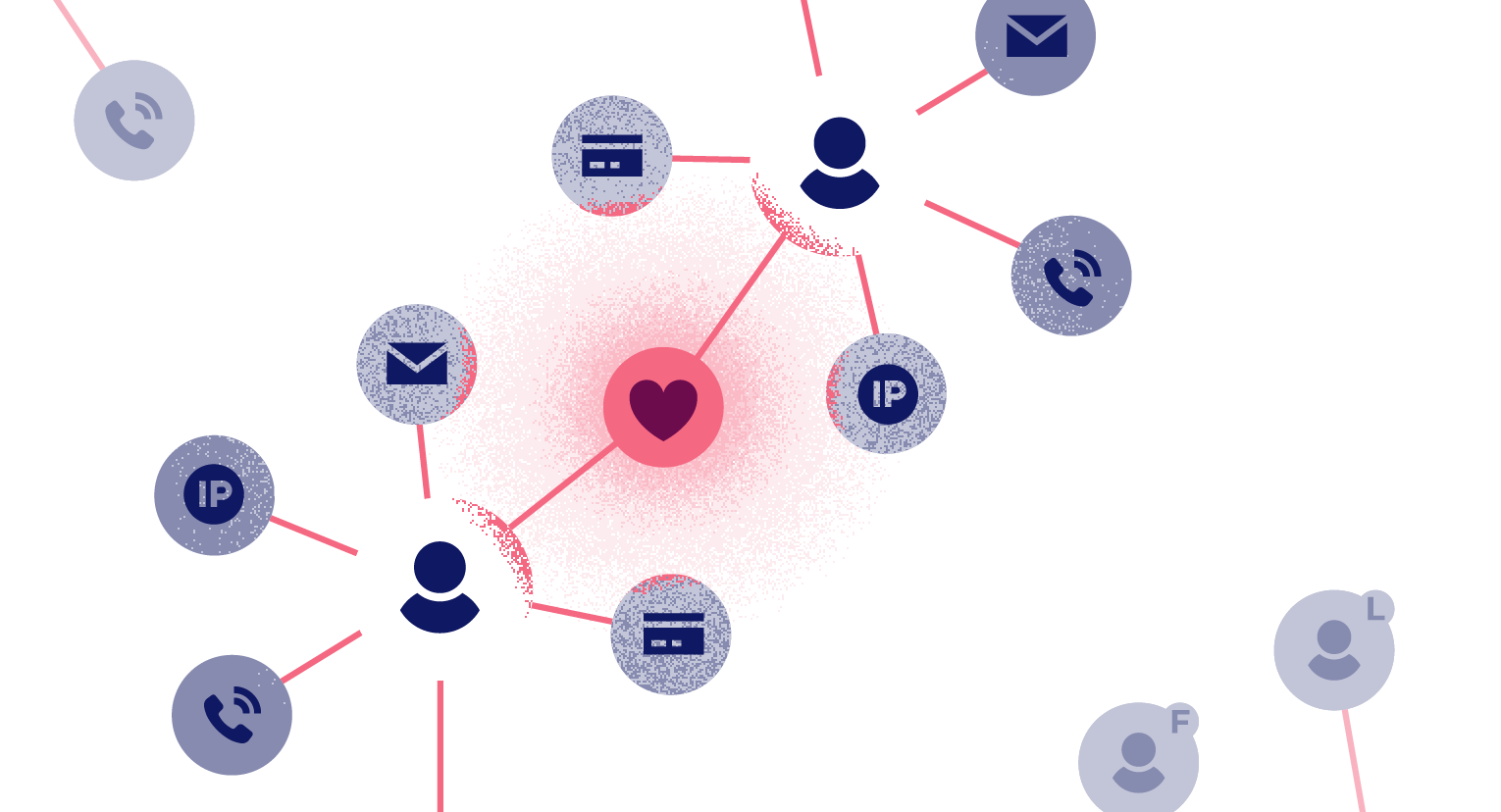
A more effective strategy uses identity-based clustering powered by networked data. By analyzing behavior across a broad network, you can uncover true customer identity—even among new shoppers. This results in reduced friction for legitimate customers and targeted controls for high-risk activity, protecting your profitability during peak moments.
Don’t let fraudsters break your heart—or your bottom line—this Valentine’s Day. Speak with one of our fraud experts to learn how you can maximize approval rates and protect revenue during the holiday rush.
