

Riskified vs. Stripe Radar: A 2026 comparison of ecommerce fraud coverage
Last updated: June 2026
If you run fraud prevention for an ecommerce business, you’ve probably watched Stripe Radar get louder over the past year: 22 product announcements at Sessions 2026, more Radar content published in the last 14 months than in any prior period, and wondered whether it’s now enough to cover you end-to-end. Stripe did make real investments. But once you separate what shipped from what was announced, and what’s new from what’s been quietly recycled, the picture is more specific than either side’s pitch: Radar reached parity in a few places, is genuinely closing in others, and leaves a handful of gaps wide open by design.
This is a side-by-side comparison of Riskified and Stripe Radar, grounded in Stripe’s own documentation and developer materials as of June 2026. It’s built to answer the questions buyers actually ask: where Radar is genuinely strong, where it’s caught up, and where the difference is structural rather than a matter of model quality.
The short answer
Stripe Radar is a capable payment-fraud tool for merchants who process on Stripe, and in 2026, it added real machine-learning infrastructure and a standalone multi-processor offering. But Radar is still a payment processor’s fraud layer. As of June 2026, Stripe’s own documentation shows no chargeback liability guarantee, no ecommerce policy-abuse product (return, refund claims, promo codes, or loyalty fraud), no dedicated account-takeover product, and no merchant-facing identity intelligence. Riskified is a dedicated e-commerce fraud platform that covers all four, with a full chargeback guarantee on approved orders, across any payment processor. The bigger question isn’t whether Stripe has fraud capabilities—it does. The question is whether it’s also an equal risk partner.
Riskified vs. Stripe Radar at a glance
The table below summarizes where each platform stands. The verdicts are based on Stripe’s official documentation, API reference, and developer blogs as of June 2026.

The rest of this post explains the rows that matter most, starting with the ones that aren’t closing.
Where Riskified’s advantage is structural
These are product and business-model gaps, not “our model is smarter” claims. Stripe’s 2026 investments don’t touch them, because closing them would mean building products Stripe currently doesn’t offer.
Does Stripe Radar guarantee chargebacks?
Not in the way most merchants assume. Stripe’s Chargeback Protection covers fraud-reason disputes only — chargebacks where the cardholder says they didn’t authorize the charge — carries eligibility conditions, and sets the protection limit at Stripe’s discretion per merchant. It excludes “item not received” and “not as described” disputes, which for most enterprises are 40–60% of total chargeback dollars. So Stripe’s protection, by design, leaves out the majority of the problem, and it shifts no liability for the accuracy of the approval decision itself.
Riskified provides a full chargeback guarantee on every approved order. It’s uncapped, and it covers both fraud and non-fraud reason codes. That’s an apples-to-apples economic comparison a merchant can run on their own data: pull twelve months of dispute reason codes, multiply by average order value, and the gap is visible immediately.
Can Stripe Radar stop return fraud, refund abuse, or promo abuse?
No. As of June 2026, Stripe’s documented abuse products target SaaS and subscription patterns, free-trial abuse, multi-account abuse, and compute theft. Return fraud, refund abuse, promo abuse, and loyalty theft have no presence in Stripe’s documentation or API. This is post-purchase ecommerce abuse, and Stripe simply doesn’t operate there yet.
Riskified’s Policy Protect was built for it. Merchants in our network have used it to prevent 15 times more abusive returns and refund claims, detected nearly 95% of unauthorized resellers, and saved 70% of their promotion budgets. Several publicly referenced merchant case studies at Riskified’s Ascend 2026 conference cited 7 and 8-figure profitability improvements from merchants leveraging Policy Protect. Catching this kind of abuse requires recognizing repeat behavior across accounts and orders, not scoring a single payment, which is exactly where a payment-anchored tool runs short.
Does Stripe Radar prevent account takeover?
Stripe does not currently offer a dedicated ecommerce ATO-prevention product covering the full account lifecycle. Stripe Identity exists, but it requires a government-ID upload — it’s a KYC compliance tool, not a checkout-time ATO signal. And when a customer saves a bank account during signup, before any payment, Radar doesn’t evaluate that event: fraud embedded at account creation stays invisible until a payment is triggered.
Riskified covers the full lifecycle, scoring both account creation (signup) and account login, so the takeover is caught at the moment it happens rather than after the fraudulent order clears.
Stripe Link sharpens this exact exposure. Link is positioned as a multi-rail wallet for cards, bank accounts, crypto, and BNPL. Link lets a shopper save credentials once and reuse them across every Stripe-powered merchant that supports it, and it’s automatically embedded in hundreds of thousands of those merchants. That reach is the selling point, but it’s also the risk: a single account opened with stolen credentials, or an existing Link account that’s been taken over, becomes a reusable key across the entire network rather than a one-merchant problem. Because Radar evaluates the payment rather than the account event, a Link wallet stood up with someone else’s identity stays invisible until it’s used to buy, and by then the stored bank account or card is portable to the next merchant. Identifying who is actually behind the account, at signup and at login, is the only point at which that risk is catchable. Scoring the transaction it eventually produces is too late.
Can merchants see Stripe’s cross-merchant identity data?
No, and this gap didn’t move in 2026. Stripe’s cross-merchant network data is real and large, but it improves Stripe’s model internally. Merchants can’t query it, visualize it, or investigate with it. The intelligence stays on Stripe’s side of the glass.
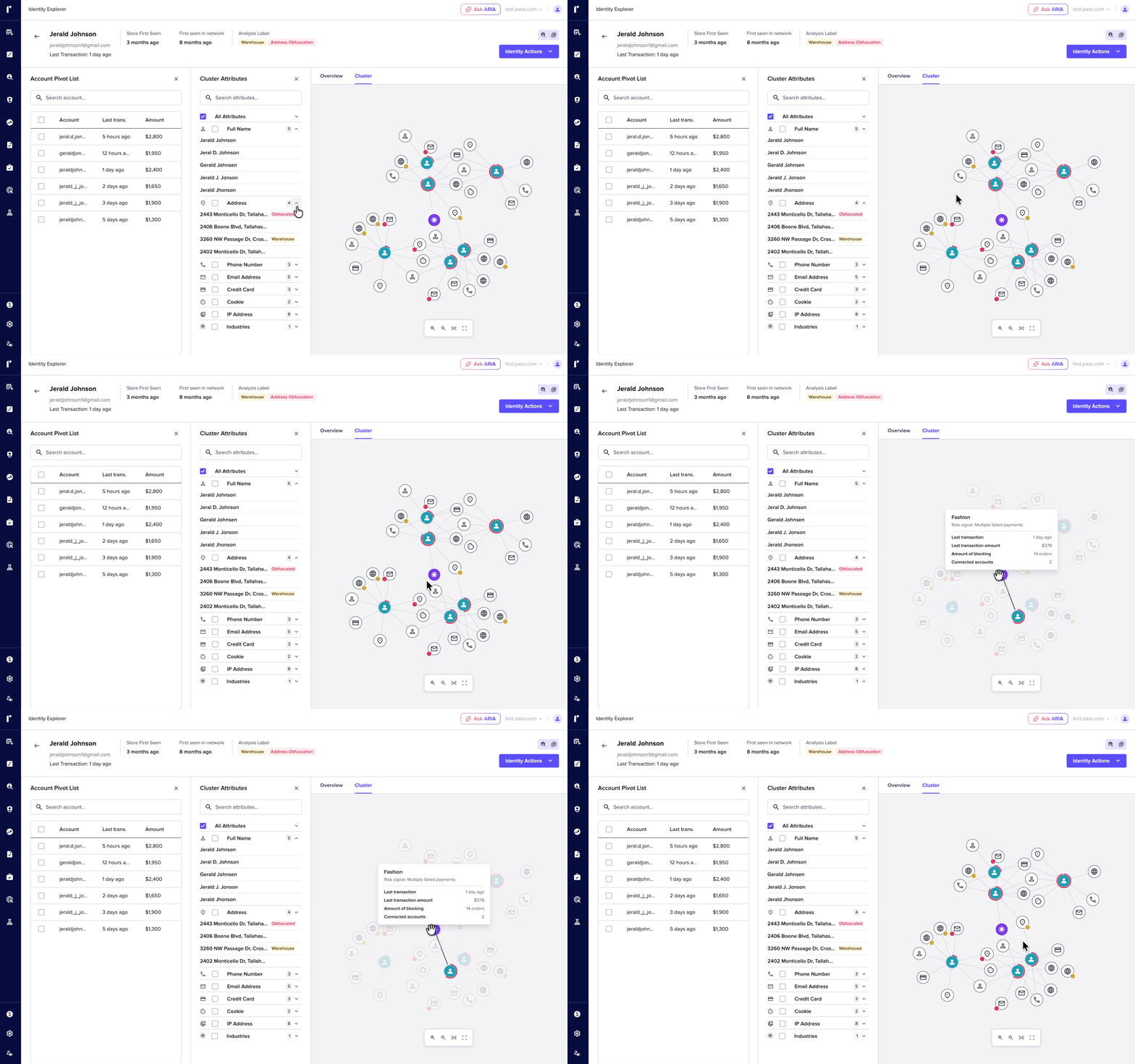
Riskified puts the identity graph in front of your fraud team. Identity Explore and Smart Linking expose identity clusters across devices, email addresses, shipping details, and other merchants, so when an abuser opens a fresh account with a new email and a new card, the graph still recognizes them. This is the difference between a network that informs a vendor’s model and one that your analysts can actually act on.
Does Stripe Radar shift ACH fraud liability?
No. Stripe Radar provides ACH fraud detection, but it doesn’t offer a fraud liability guarantee for ACH outcomes. While Stripe separately guarantees certain ACH bank-initiated returns, merchants absorb fraud losses and any returns outside that guarantee. Riskified takes liability for approved ACH transactions, including covered fraud and insufficient-funds returns.
Where Stripe Radar is genuinely closing the gap
Stripe’s 2026 work is real, and pretending otherwise would be a mistake. Several areas that used to be clean wins for specialized platforms are now contested or at parity.
Stripe rebuilt Radar’s model infrastructure with Shield NeXt, a fully deep-learning architecture that replaced its earlier XGBoost-plus-neural-network setup and cut training time by roughly 85% to under two hours. It’s a solid foundation. Worth knowing, though: this work was carried out in mid-2022 and published in March 2023. The widely shared April 2026 developer deep-dive that reintroduced it is a republication, not a new development, so the “2026 architecture” story is, in large part, three-year-old engineering getting a fresh press cycle. The infrastructure points to stronger R&D capability over time, not to proven superiority in fraud decisioning today.
Two related moves are best read as parity rather than advantage. Stripe tripled its model-release cadence through automated retraining — something autonomous retraining on fresh data has long been core to how Riskified operates. And Stripe’s Risk Insights now surfaces contributing signals to merchants through Radar for Fraud Teams; it’s a capable explainability layer, broadly comparable to what Riskified already provides, not a leap past it.
Stripe also brought several previously gated capabilities to general availability. Custom per-merchant models are now GA, letting merchants pass signals like loyalty status and product category to tune their risk scoring, though it remains one horizontal model tuned per merchant, an outcome Riskified achieves by incorporating merchant-provided signals through its API. And Stripe now offers Radar as a standalone multi-processor fraud layer, available regardless of which PSP a merchant uses. That’s a genuine move into standalone fraud territory, but it’s cards-only — ACH and SEPA aren’t covered when processed elsewhere, and it returns a signal, leaving the merchant to build their own block logic and to carry the liability.
One structural question Stripe’s roadmap doesn’t answer
Even Stripe’s repositioning raises a question its features can’t close. When Forrester assessed Sessions 2026, it described Radar’s shift from a bundled feature to a standalone, cross-platform risk layer as strategically significant, and then asked the obvious follow-up: Will merchants trust Radar as a neutral fraud layer when Stripe is also their payment processor? A processor that profits from approved volume sitting in judgment of which transactions to approve is a built-in tension. Riskified has no such conflict; its only incentive is the accuracy of the decision it guarantees.
What about agentic commerce?
Stripe made agentic commerce a centerpiece of Sessions 2026, launching an Agentic Commerce Suite built around new payment primitives: Shared Payment Tokens, a Machine Payments Protocol, and the Agentic Commerce Protocol it co-created with OpenAI and Meta. Radar is positioned as the built-in fraud layer for agent-initiated transactions.
It’s a smart land-grab for a new payment rail, but the fraud capability itself isn’t new — it’s existing Radar applied to a new primitive, currently US-only and in private preview. The same coverage gaps that apply to Radar today apply here: scoring an agent’s transaction is still scoring a transaction, not identifying the shopper, guaranteeing the outcome, or covering post-purchase abuse.
Is Stripe Radar enough for ecommerce fraud?
It depends on where your real exposure sits. Radar is a reasonable default for a Stripe-native merchant who wants fraud scoring at the point of payment and is comfortable owning the approval decision and the chargeback risk. If that’s the whole job, Radar does it well.
It’s structurally incomplete if your exposure is post-purchase abuse, repeat-offender account takeover, multi-processor routing, or if you need guaranteed liability on approval decisions. Those problems require products Stripe doesn’t currently offer and a network your team can actually investigate — not just a better score at checkout.
What the numbers look like in practice
The clearest proof point is a large enterprise merchant who made the switch. A business processing roughly $200M in gross merchandise value moved off Stripe Radar to Riskified and saw post-authorization conversion rise 7.8%, chargebacks fall 82%, and approval rates climb to 96% from 92.58%. Those gains come from approving more good orders while guaranteeing the bad ones — the downstream payoff of identifying the shopper rather than scoring the transaction.
What to watch
Three Stripe developments could change this comparison if they mature. Embeddings and representation learning are the most consequential: if Stripe turns them into a durable detection edge, the model-quality conversation shifts. A policy-abuse expansion from SaaS into ecommerce — Stripe has published refund-fraud research — would put Stripe on Riskified’s home turf for the first time. And if Stripe ever exposes its cross-merchant identity data directly to merchants, the identity gap closes. None of these exist as shipping ecommerce products today, but all are worth tracking.
Frequently asked questions
Is Stripe Radar a complete ecommerce fraud solution?
Not yet. As of June 2026, Radar covers payment fraud well but has no documented products for ecommerce policy abuse, account takeover, or merchant-facing identity investigation, and it offers limited chargeback coverage.
Does Stripe Radar work if I don’t process payments on Stripe?
Partially. Stripe now offers Radar as a standalone multi-processor fraud layer for merchants on other processors, but it’s cards only and provides a risk signal rather than a decision or guarantee. Riskified works across any payment processor and takes liability on the decision.
What’s the difference between Stripe Radar and Riskified?
Stripe Radar scores the payment at checkout. Riskified is a dedicated fraud platform that identifies the shopper across devices and merchants, covers post-purchase abuse and account takeover, and takes full liability on approved orders.
Does Stripe Radar cover return fraud and refund abuse?
No. Stripe’s documented abuse products focus on SaaS and subscription patterns. Return fraud, refund abuse, promo abuse, and loyalty theft are not in Stripe’s documentation or API. Riskified’s Policy Protect covers them.
Does Stripe Radar offer a chargeback guarantee?
Stripe’s Chargeback Protection covers fraud-reason disputes only, with eligibility conditions and a limit set at Stripe’s discretion. It excludes non-fraud disputes like “item not received” and shifts no liability on approval accuracy. Riskified guarantees every approved order, fraud and non-fraud, uncapped.
Did Stripe’s 2026 model upgrades close the gap?
They strengthened Stripe’s infrastructure and reached parity on retraining cadence and merchant-facing explainability. But the headline Shield NeXt architecture is 2022 work republished in 2026, and the investments don’t address the structural gaps in guarantee, policy abuse, ATO, or merchant-facing identity.
Does Stripe Radar prevent account takeover?
Stripe has no dedicated ecommerce ATO product. Stripe Identity is a KYC tool requiring government-ID upload, not a checkout-time ATO signal. Riskified covers both account signup and login.
Can I use Riskified and Stripe together?
Yes. Riskified is processor-agnostic and works alongside Stripe as your payment processor, adding the fraud coverage and liability guarantee Radar doesn’t provide.
See the difference on your own data
The gap between scoring a transaction and understanding a shopper shows up in the numbers your team reports — approvals, chargebacks, and recovered revenue. Request a demo of Identity Explore and the Riskified platform to see what your customer identities actually look like.
How to eliminate refund and return abuse on Shopify Plus with enterprise‑grade risk intelligence

By integrating Riskified via the Shopify app store, Lorna Jane cut fraud costs and lifted order conversions.

The recent wave of account terminations by Shopify Payments due to VAMP compliance has left many ecommerce stores scrambling for answers, new payment solutions, and questioning how to safeguard their businesses from future risks.
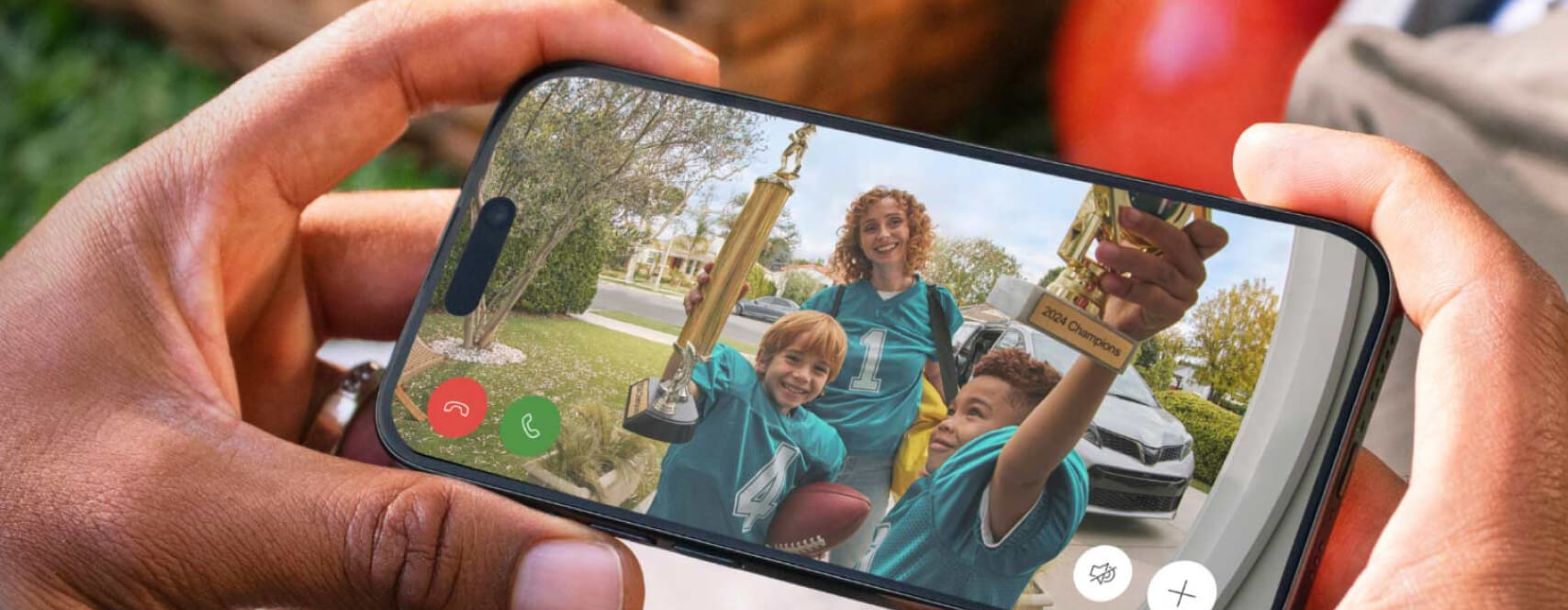
By integrating Riskified via the Shopify App Store, Ring declines $4M+ in abuse returns that would otherwise have represented pure loss.
Request a personal demo
Learn how we boost eCommerce growth and reduce customer friction.
Let's talk