

Risk Rundown:
Luxury fashion
Current fraud landscape
Luxury fashion is poised for a new era of opportunity, even as the industry navigates tariff turmoil. While challenges like economic uncertainty fueled by trade disruptions and a growing ‘dupe culture’ present hurdles, they can also spark innovation and ingenuity.
McKinsey’s State of Fashion Luxury report highlights this as a pivotal moment for brands to not only protect their legacy but to redefine it. By crafting well-curated and unique experiences and leaning into exceptional customer-first strategies, luxury retailers have the chance to enhance their reputation and unlock sustained profitability.
Favoring loyal customers while blocking fraud is more than a defensive measure; it’s critical in times of economic downturn. Premium goods, with their exclusivity and allure, stand as timeless symbols of aspiration. Safeguarding these products from threats like counterfeiting and fraud not only protects revenue but also reinforces the very qualities that define luxury—scarcity, trust, and excellence. Every step taken to accurately approve genuine purchases strengthens bonds with loyal customers while welcoming new advocates of the brand.
Luxury fashion’s clientele is evolving, becoming younger and more diverse, and with that shift comes remarkable potential. By harnessing advanced technology and deeper insights, retailers can better understand their audience, detect fraud with precision, and cultivate long-term loyalty.
Key challenges:
In addition to more ubiquitous fraud methods such as account takeovers (ATOs) and chargeback abuse or disputes, Riskified’s research team has identified increases and received reports of new fraud tactics targeting luxury fashion merchants, including:
- Social engineering: Fraudsters use IDs with legitimate online and offline histories. Orders appear to originate from the user’s device due to mature IP linking and often involve purchasing high-value items with foreign credit cards.
- Commercial shipping addresses: Fraudsters use old emails and match billing addresses to credit cards while shipping orders to nearby hotels. This tactic likely aims to justify geographic mismatches between billing and shipping addresses, mimicking legitimate behavior by delivering to commercial locations where pickup appears easier.
- Address obfuscation: Fraudsters disguise address modifications, allowing criminals to bypass standard payment flags and commit fraud with greater ease.
- “Pay by link” fraud: This payment option allows customers to complete purchases via links sent through SMS or email. These can be problematic due to the absence of restrictions on payment attempts and a lack of restrictions on chargebacks.
Risk trends
This section examines the common yet distinct fraud tactics Riskified sees within luxury fashion transactions, providing insights into how fraudsters exploit this high-value market.
YoY RISK LEVELS BY FASHION SUB-INDUSTRIES
Riskified found that luxury fashion experienced a significant uptick in risk from September 2023 to August 2024 compared to the previous year, with risk concentrated in distinct pockets.
Polarization of international vs domestic risk
The risk associated with international transactions has become increasingly distinct from domestic transactions, and navigating the evolving landscape of international transactions is becoming more challenging. Merchants face an increasingly diverse international customer base that comprises students, travelers, and global shoppers, any of whom may have legitimate but mismatched billing and shipping addresses or card BINs.
Risk by product category
Product category plays a crucial role in fraud exposure, with footwear being 77% more risky than average. Shoes are also among the top three most-purchased luxury fashion items, increasing operational challenges for merchants.
RISK LEVELS BY PRODUCT CATEGORY
Risk by price
In luxury fashion, the higher the product price, the riskier the purchase. However, across all regions, the $0 – $1,000 per item price range is the highest-volume purchase category and accounts for over 55% of fraudulent orders. This makes it challenging for merchants to avoid erroneous declines and customer dissatisfaction. Especially during critical shopping and gift-giving seasons, brands must be able to discern identity at checkout and avoid false declines.
RISK LEVELS BY PRODUCT PRICE
FRAUDULENT POPULATION
TOTAL POPULATION
Seasonality
The pre-holiday period is the busiest for luxury fashion sales, but for fraud, spring and summer are the busiest periods. Looking at YOY trends, May, March, and February showed the highest increase in risk levels in 2024 (40% +) compared to the previous year.
Proven strategies
Luxury fashion merchants need intelligent fraud prevention strategies that align with their all-important customer satisfaction goals, as experience is more critical in a sector where items come with such high price tags and requirements for personalized service.
Avoiding customer insult and maintaining high-end service is essential for sustaining brand loyalty and reputation, but excessive manual processes for chargebacks and return reviews are operationally unsustainable. Addressing this issue requires smarter solutions that balance security with seamless payment approval, ensuring both trust and profitability in every transaction.
Automate fraud prevention
With Riskified, luxury fashion merchants can reduce chargeback rates, boost approval rates, and maintain brand desirability for good customers. Merchants can embrace an increasingly diverse customer base by using AI to accurately differentiate between fraudulent and legitimate customers at the point of purchase. With greater automation and accuracy, merchants can focus on providing premier customer experiences and enjoy the profitability that follows.
Adopt identity-based solutions
In the luxury world, sophisticated fraudsters are able to mimic loyal buyer behavior to blend seamlessly with legitimate transactions, making detection more difficult.
Luxury brands seeking global expansion often face unique and evolving risks distinct to the new regions. For example, many will need to detect and mitigate bulk ordering by unauthorized resellers. Without detailed market intelligence or a network to link orders, distinguishing between trustworthy and abusive shoppers becomes nearly impossible.
Figures are derived from a combination of internal and external sources. Personal luxury fashion encompasses luxury apparel, accessories, watches, jewelry and eyewear.
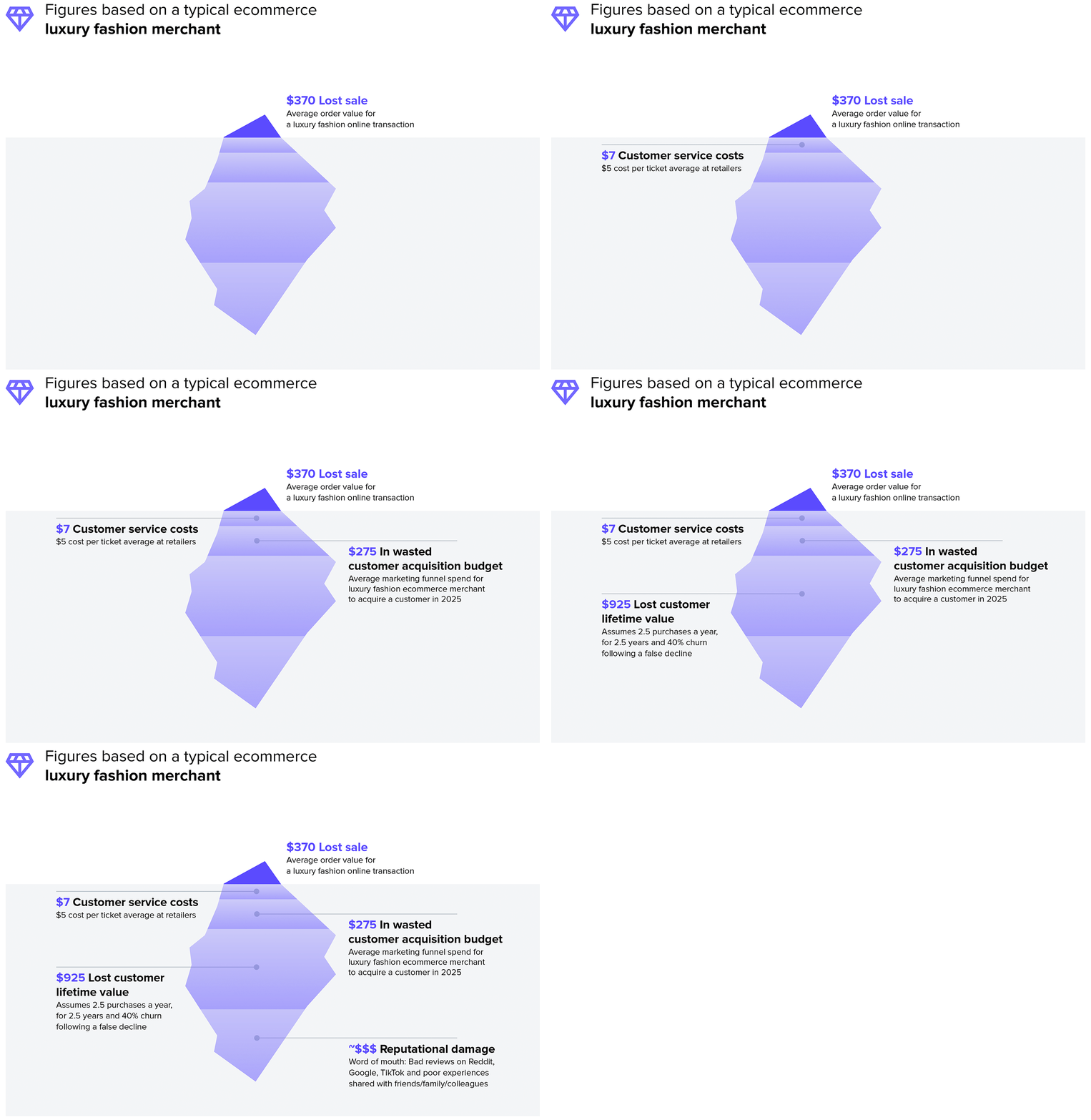
All the while, false declines have a huge negative impact on all retailers, but for luxury merchants, the devastation is particularly acute. The average luxury fashion clientele has a high lifetime value for the retailers who can capture their business and loyalty, but in tune with their spending, this clientele expects personalized and uncomplicated checkout experiences. For merchants, this requires balancing automation with human oversight in quick decision-making.
Riskified’s dynamic technology examines patterns at a network-wide scale. By using machine learning to gauge which checkout pathway is right for each order’s risk level — whether directing them straight to authorization, declining them as fraudulent, or judiciously deploying additional verification where it’s absolutely necessary — luxury merchants can foil fraudsters and approve more good orders.
84%
of orders in luxury have external links to orders from other merchants
63
average number of externally linked orders
9
average number of externally linked merchants
Partner with Riskified
For over a decade and through several market shifts, Riskified has helped many of the leading luxury fashion merchants around the world achieve industry-leading authorization rates, improve customer experience, and retain their exclusivity.
About this Risk Rundown
Across industries, Riskified captures and analyzes data related to orders processed through our vast merchant network. We combine our findings with exclusive research and intelligence from online fraud forums to provide merchants with category-specific insights.

Yael Hemo
Data Analyst, Data Insights team

Adi Dick-Charnilas
Senior Data Analyst, Data Insights team